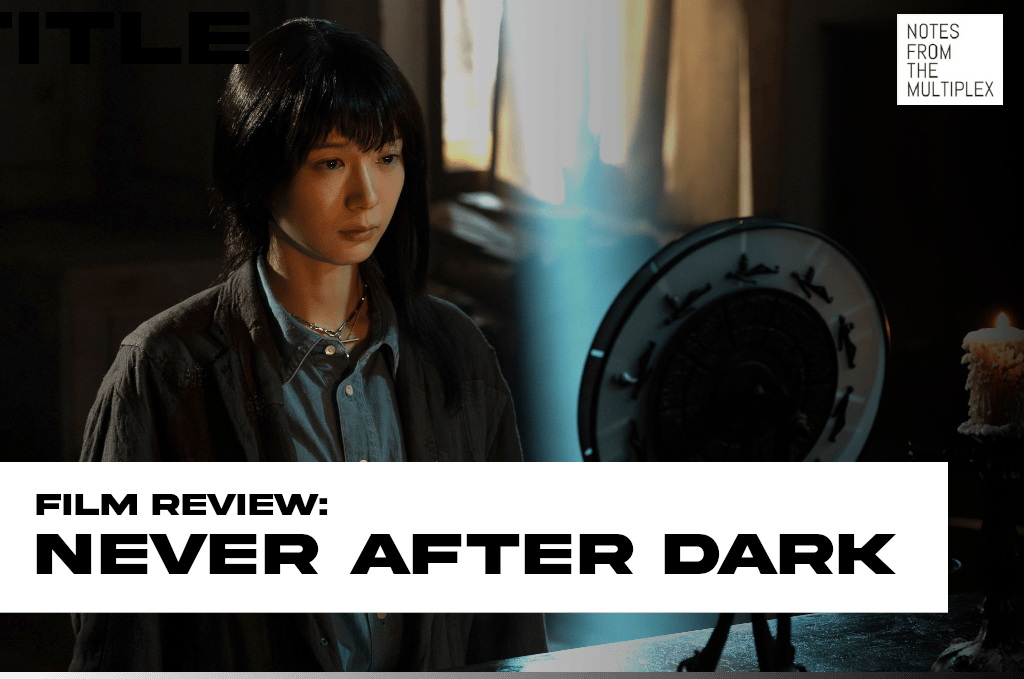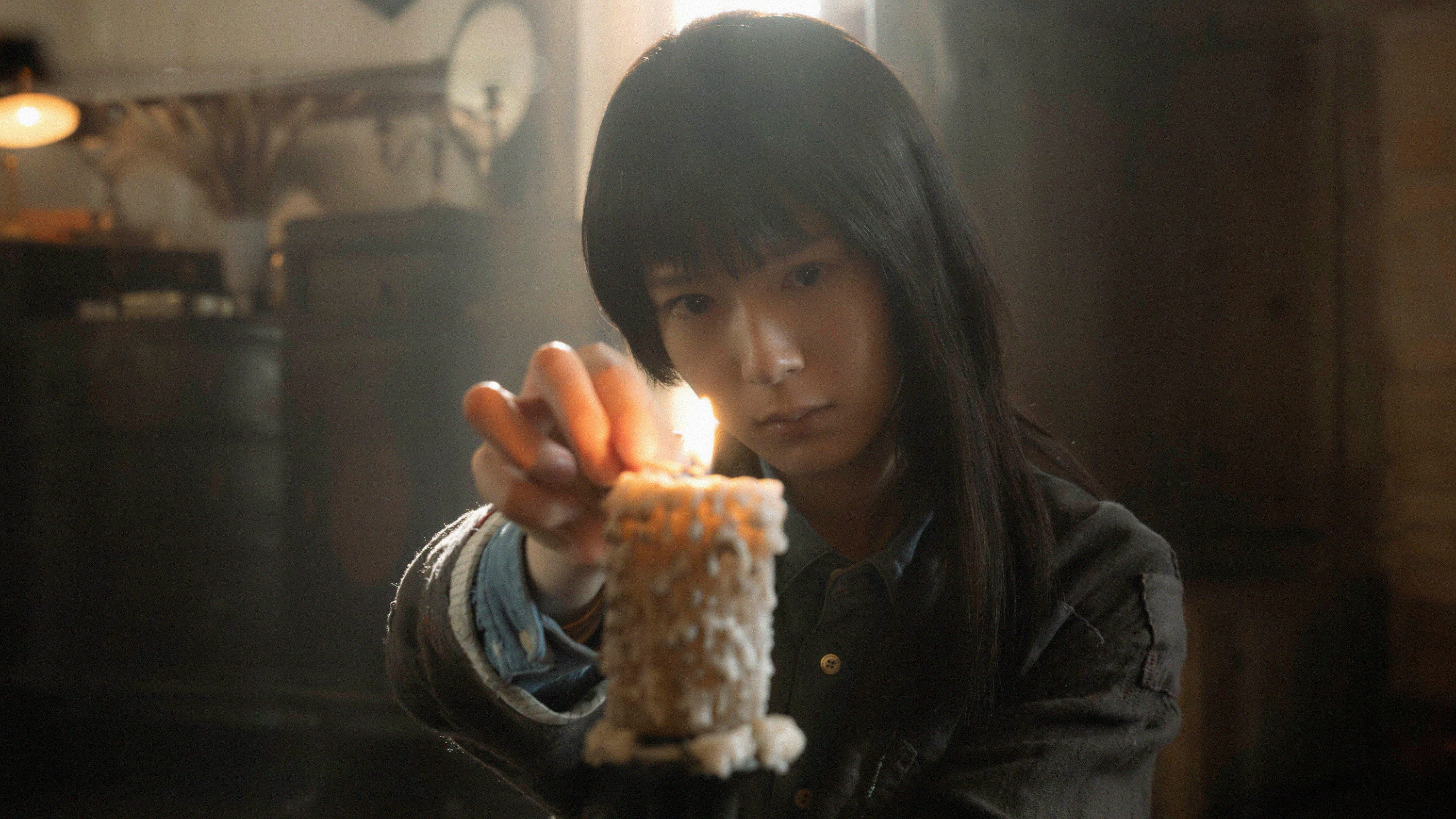

It is best to go into Never After Dark with as little knowledge as possible. That is probably true of any film – what viewing experience isn’t improved by avoiding the revelations and spoilers offered by trailers, reviews and word of mouth? But for director Dave Boyle’s Japanese ghost story, the less you know, the better. As such, I won’t detail plot points to any extent here, other than to say, this is a haunted house tale, replete with flickering lights, long (seemingly) empty corridors and a multitude of things that go bump in the night. Patrick Ouziel’s cinematography is controlled and polished, reminiscent of Kubrick’s take on the horror genre in The Shining, rather than the visceral grime of The Texas Chainsaw Massacre’s 16mm stock.
The film’s protagonist, an itinerant medium named Airi (Moeka Hoshi), is immediately engaging, drawing our sympathy as an audience for reasons that become quickly apparent. Airi takes on the job of unravelling the haunting of a former hotel, now the private residence owned by the widower Teiko (Tae Kimura). Hoshi offers an effortlessly charming performance as a woman used to encountering the supernatural, which is clearly as much a part of her day-to-day existence as waking up or drinking her morning coffee. But the unique context of this job quickly puts her on the back foot, with her usual bag of spiritual tricks proving insufficient to dispel the haunting and move on to her next paying gig.
Never After Dark has been discussed as a Western take on Japanese horror, or indeed, a Japanese take on Western horror, with the American-born Boyle overseeing this transcultural blend of the sensibilities seen in the works of Takashi Shimizu and Mike Flanagan. I found myself smiling throughout, enthralled by the performances and atmosphere of Boyle’s creation, bolstered in no small part by Jonathan Snipes’ tension-building but slightly atypical score. Like any good horror text, it also knows how to balance fear with moments of dark comedy. There’s much to enjoy here, although its formulaic choices sometimes undermine its more unpredictable genre innovations. Is it the scariest or most innovative horror experience? No, but it does offer enough to justify your attention.