
Arriving at a packed house party, older brother Cole searches for the troubled teen Duckett, finding his bloodied sibling alone and barricaded in a locked room. Escorting his nonsensically rambling brother from the house, their fraternal bond is stretched somewhat when the teen ruthlessly stabs Cole in the chest before proceeding to turn the blade on his own skull, killing himself before a crowd of phone-brandishing onlookers. In this disturbing single-take opening sequence, Talk to Me announces itself as a visceral horror film unwilling to pull any punches.
Duckett, it turns out, was the victim of a strange object: an embalmed hand supposedly taken from the body of a medium, covered in graffiti and the signatures of those who have used it to connect with spirits from beyond and survived. This mysterious treasure/curse has been doing the rounds of interconnected social groups in Australian suburbia, with the TikTok generation gamely filming the results as if it were the new ‘ice-bucket challenge’. Light a candle, grab the hand, invite a spirit by uttering the words ‘talk to me’, and then make sure you let go of the thing before it’s too late; no one has lasted longer than 90 seconds.
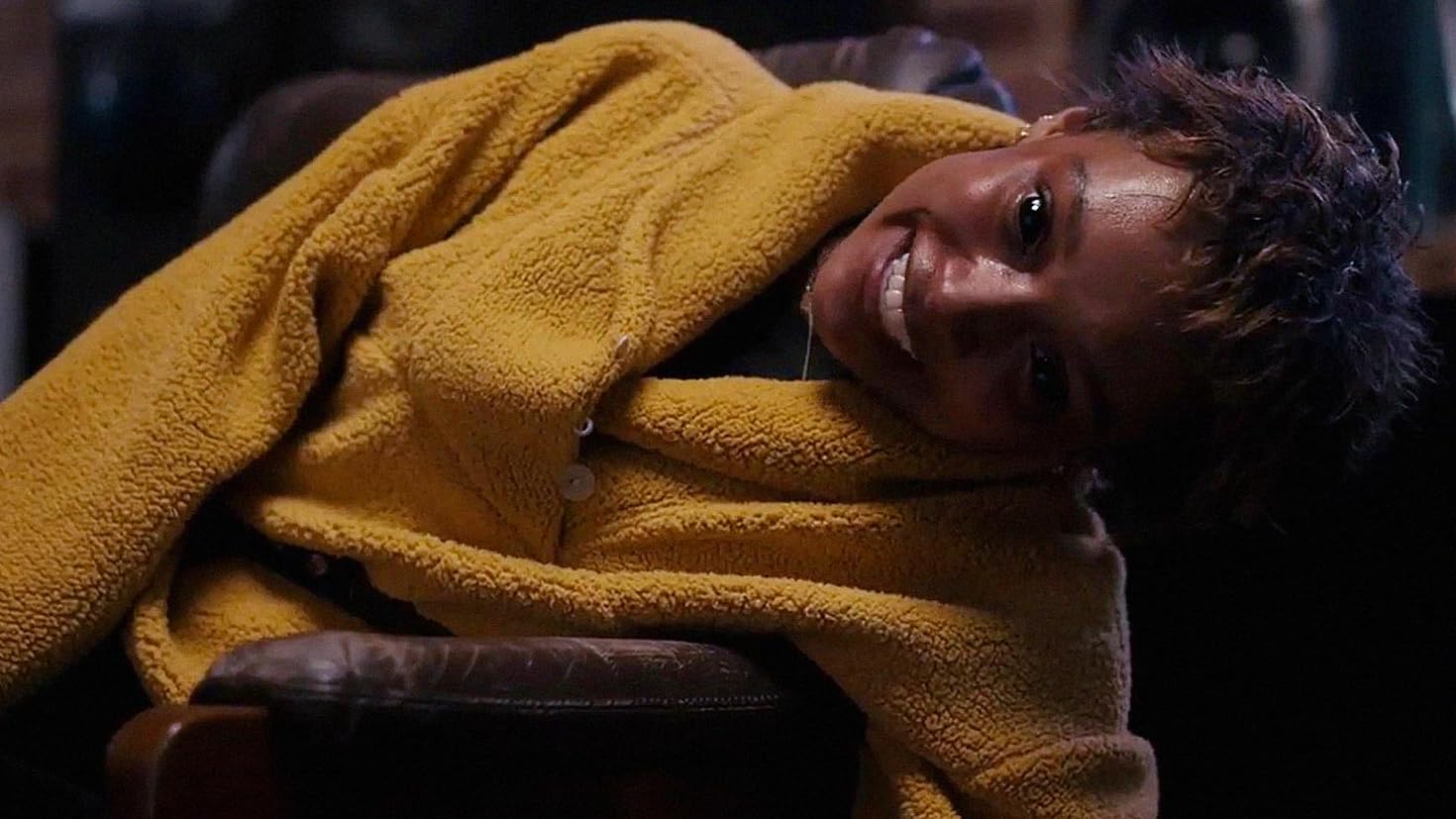
Up for the challenge is the socially awkward Mia, your typical horror protagonist suffering from a traumatic past and PTSD. Initially hesitant, but wanting to establish herself as one of the cool kids, Mia’s first experience of apparently ghostly possession sees her achieve a kind of paranormal ecstasy. Known to have tried different drugs and desperate for a form of escapism, the experience offered by the embalmed hand to Mia and her friends, including the siblings Jayden and Riley, whose mother has effectively adopted the troubled Mia into her household, is presented as something akin to heroin, with the teenagers attempting to chase the mysterious high of their first dose. What visitor from the other world, seen only by the individual who takes their hand, provides a sense of possibility and experimentation, with directors Danny and Michael Philippou working at their best in the film’s montage sequences that see an assortment of spirits possess the bodies of the chosen participants to the bemusement and laughter of their spectating friends.
The real horror here seems to be the overruling influence of peer pressure, with the teenagers seemingly oblivious to the dangers of the things they do for attention and acceptance. There’s an obvious pointedness to this element of Talk to Me, satirising the self-centred performativity of social media among a certain breed of Gen-Z, laughing off the mindlessness of their actions as long as it results in ‘likes’ and ‘follows’. There will undoubtedly be discussion of the film as an ‘elevated horror’: that frustratingly misused and pseudo-critical term that seems to willingly forget the history of the genre, dismissing antecedent classics like Night of the Living Dead (1968) or Invasion of the Body-Snatchers (1956) that do in fact – gasp – contain social commentary! In fact, I’d argue that any social critique Talk to Me employs is mostly surface-level, refusing to overpower the film’s central entertainment and shock value. With its bloody jump scares and genuinely disturbing imagery, the film opts for the bodily carnage of The Evil Dead rather than the comparatively minimalist critique of our contemporary obsession with social media in last year’s equally fantastic but tonally distinct, We’re All Going to the World’s Fair.
Arguably, Talk to Me does showcase some typical shortcomings of a feature debut. Directing duo Danny and Michael Philippou (the former also serving as one of three credited writers) are able to craft horror set pieces with ease, but all too often smudge the connective tissue of the narrative that progresses from one shock moment to the next. Of course, the horror genre by default allows for leeway in regard to any notion of ‘realism’, but you would still expect a film to play by the guidelines it sets for itself. Too often, the ‘rules’ of the embalmed hand are left frustratingly ambiguous, and seem to adapt themselves for different purposes as and when the jump-scare or imagery needs it. Similarly, I couldn’t help but feel that the audience’s suspension of disbelief risked toppling when certain events play out. Following the central characters’ inevitable and brutally visualised realisation that maybe they shouldn’t be messing around with demonic possession, the police are understandably called in. The given event itself should have set off any number of alarm bells for the police, and yet despite their involvement, there is little consequence, written off between acts by the teens in a lazily offhand quip that ‘there’s nothing they can do’. Imagine a police officer walking into the middle of Regan’s more violent possessions in The Exorcist and arriving at the conclusion – well, there’s nothing to be done here! Okay, so tedious procedure and legal oversight does not a horror film make, but Talk to Me relies upon both the police and doctors being incompetent to the point of stupidity.
Whilst the third act seems to position the film in an impatient race toward that (arguably predictable) final image, letting the more controlled plotting of its opening hour fall by the wayside, as an intense and routinely bloody horror experience, Talk to Me more than justifies the price of admission. It just seems to me that perhaps the film has been slightly overhyped, potentially suffering (rather than benefiting) from the adulation it has received from the likes of Peter Jackson, who has referred to it as the ‘best, most intense horror movie I’ve enjoyed in years’.
 Notes from the Multiplex