
Listeners of James O’Brien’s LBC show will be familiar with a term popularised, if not coined, by the radio host to account for the political divide of post-Brexit Britain. Describing the stubborn bi-partisanship of contemporary politics, O’Brien likened the right/left divide in political life to rival football teams and their fans.
‘We’re completely immersed in the “footballification” of politics.’ O’Brien tweeted in 2019. ‘Actions are judged not by an objective assessment of their content but by the perceived allegiances of protagonists.’
If at some point in your life you found yourself supporting Chelsea or Arsenal, Labour or Conservatives, there comes a point where your entrenchment within and support of such a faction transcends rational thought and self-reflection. You become willingly blind to the shortcomings or outright failures of your purported ‘team’. You swear your allegiance to the flag of your choice and damn anyone who dares to shine a light upon your person. This is my team, my side, we are right and you are wrong.
I’m worried that the same thing is happening – or has already happened – to film culture.
Flicking through social media yesterday (4th August 2021), it became immediately obvious that ‘film twitter’ was losing its collective mind – once again – over the discussion around comic book adaptations and director Martin Scorsese’s comments in 2019 claiming that the output of Marvel and DC was ‘not cinema‘. This time it was director James Gunn poking the bear whilst being interviewed about his latest release, The Suicide Squad, a film which I’ll declare right now, I absolutely loved. “I just think it seems awful cynical that [Scorsese] would keep coming out against Marvel, and that was the only thing that would get him press for [The Irishman]”

In about as much time as it would take for Letterboxd fanatics to lock and load quickfire ‘This is cinema’ memes and sarcastic comebacks to both Gunn’s and Scorsese’s comments, film twitter seemed to be at war.
This was to be expected.
Due to the increasing atmosphere of ‘footballification’ amongst fans and consumers of practically any media product or artistic endeavour, the lines were drawn and the trenches were dug in.
‘Scorsese IS cinema!’ writes one user. ‘Marvel films are still a cultural excrescence which shit over any value cinema might have in the mindless pursuit of profit’ wrote another. Others rushed to defend Gunn, attacking Scorsese in the process, although from my vantage point – one which has admittedly been filtered through the contacts, followers and assorted algorithms of a Film Studies academic on Twitter – Gunn seemed to be getting the brunt of the backlash.
What struck me reading through much of this discourse, was the deep-seated tribalism of this commentary: Scorsese IS Cinema. ALL Marvel films are bad. Comics book films CAN’T BE ART. Immediately, we were in the realm of long established notions of high and low culture.
What upset me more was the fact that so much of this animosity and outrage came from established film critics, academics and commentators that I admire and respect. Where was the objective evaluation? The critical reflection?
This wasn’t the discourse determined by ‘objective assessment of their content but by the perceived allegiances of protagonists.’ And it was an unquestioning allegiance to some unspoken notion of what cinema is and isn’t.
I get it, I do. Scorsese’s approach to cinema, not only in terms of his actual films but his lifetime of work preserving, sharing and writing about his love of cinema and its history is something beyond reproach. As a champion of film history and preservation, Scorsese is one of a handful of directors who actually practice what they preach. By comparison, Gunn is a young(er) upstart who is primarily known for his work in a genre that has historically been sidelined and disregarded as juvenile, unimportant or even damaging to notions of art and culture – a view which is, for me, simply incorrect.
What upset me more was the fact that so much of this animosity and outrage came from established film critics, academics and commentators that I amire and respect…
But there is something inherently problematic in swearing blind allegiance toward one perception and understanding of how, when and why cinema is to be valued.
Part of the issue, I believe, is around a sort of learned snobbery that has itself come to be valued within the realms of cinephilia and fandom – whether that has been fostered within academia or on fansites, social media, message boards or even in old-school post-film discussions with friends and family. Scorsese, like Hitchcock, Coppola and more recently Tarantino and Nolan (notice any patterns here?) have been routinely elevated by the gatekeepers of ‘Cinema’ to the point where for many, it becomes heresy to even consider challenging their importance as (drumroll please) auteurs.
There is a certain discursive value in being able to perform your love (and most importantly, the depth of your knowledge) of cinema through reference to a certain director or producer, artistic movement or obscure film.
‘Yeah I watched that and thought it was okay, but the director was completely stealing that part from Scorsese’s After Hours there…’
‘What’s great about Tarantino is how he shines a light on all these unknown and forgotten films…’
This isn’t just the case with the heavyweights, the household names like Spielberg or Lucas, but is similarly reflected by one’s ability to quote obscure names and films from Hollywood and beyond alongside the established canon of cinematic greatness. There’s a particular perceived value in being able to cite unknown films from across the globe, touting a love for nothing else but Japanese/Iranian/Italian cinema.
I for one, have been completely guilty of this in the past.
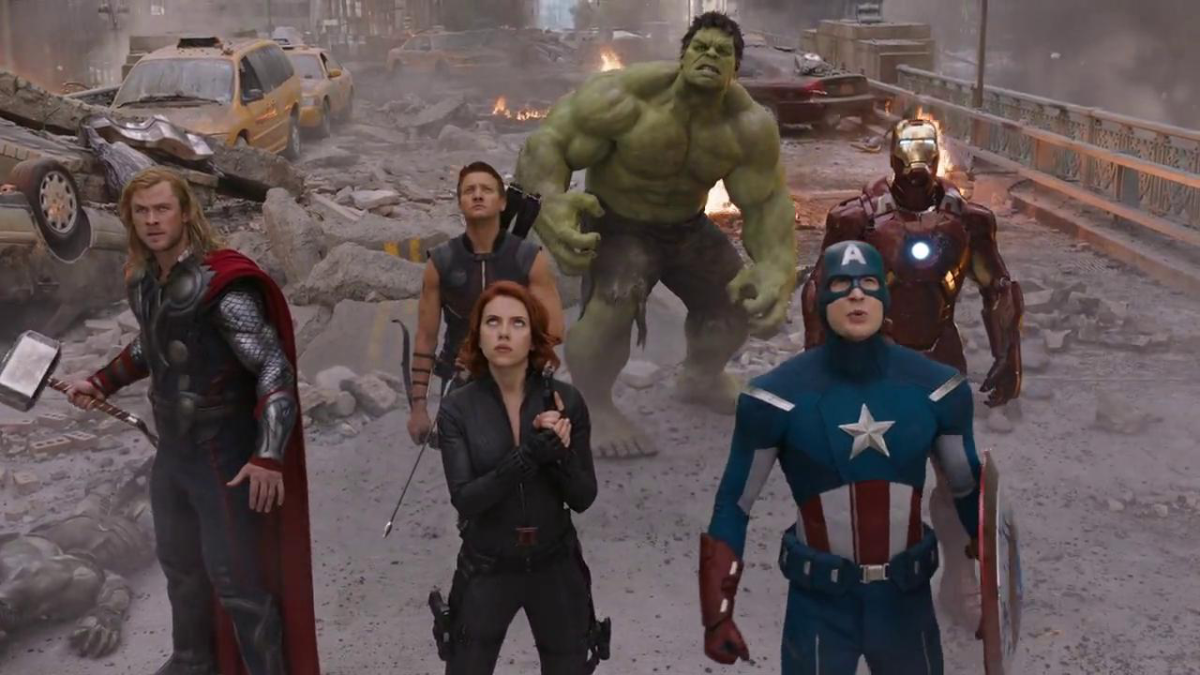
I remember being reluctantly dragged along to a screening of The Avengers (2012) during my days as an undergrad Film Studies student. ‘Really? Do we have to watch that?’ I asked, proudly making a point of the fact that I had deliberately avoided what became known as the Marvel Cinematic Universe up until that point. Dismissive of ‘popcorn flicks’ and franchises, I would have at that point much rather been working my way through the results of Sight and Sound’s Best films of all time poll, where not a single cape or superpower was to be found. Kurosawa, Bresson and Murnau were my directors of choice. Anyone who hadn’t watched Kubrick’s or Tarkovsky’s entire filmographies were wasting their time.
‘This isn’t cinema’ I probably said or at least thought, pretentiously, stepping out of the *urgh* multiplex having watched The Avengers (why aren’t we at the arthouse cinema down the road?).
God, I must have been so obnoxious.
I probably still am.
What I’m getting at with all of this is the sheer stupidity of this kind of stubbornness. It’s the arrogance of being able to confidently draw a line – usually somewhere between the multiplex and the arthouse cinema – between what cinema ‘is’ and what you deem unworthy of your own personal time, attention and admiration, and more importantly other people’s. To look down upon someone’s love of a comic book adaptation or a horror film or a musical is one thing. To evangelise in the name of some purported ‘essence’ of cinema’s true artistry and value, and in doing so, crucify the fans of films beyond that definition of ‘cinema’ is to facilitate nothing but elitism, snobbery and division.
In my capacity as a Lecturer of Film Studies, it has become routine to hear the concerns of young students who are anxious about their choice of a particular film or genre as the subject of an essay because of some notion that it isn’t a ‘proper’ film or subject. It’s genuinely something which really upsets me when I hear this kind of insecurity about what interests and engages a student.
‘I was thinking of writing about Coraline as an adaptation, but I don’t know if it’s suitable…’
‘Wow, that sounds great – why don’t you think it would be suitable?’
‘Well, it’s not exactly a proper film is it – it’s a kid’s film – and it’s not like the Jane Austen or Shakespeare we’ve been studying…’
‘But that’s ridiculous – you watched it and read it – you enjoyed it, and it has fans and audiences across the world. It’s a story with universal themes and ideas, and its a really intelligent adaptation of Neil Gaiman’s novella! Why wouldn’t we want to learn more about it?’
‘Well, it’s not as arty as Pride and Prejudice…’
‘So? Does it mean something to you?’
‘Yes’
‘Then it has value – talk to me about what it means to you…’
I’m sick and tired of people defining what does and doesn’t have value for other people.
You’re allowed to not like something, but to criticise, look down upon or dismiss others because they do is tantamount to cultural oppression. We have to move away from this kind of ‘us and them’, black and white rhetoric of discourse, this ‘footballification’ that is at play in discussions and responses to the kind of commentary epitomised by the Gunn and Scorsese story.
It’s genuinely something which really upsets me when I hear this kind of insecurity about what interests and engages a student.
For many years I continued espousing my Film School snobbery to whoever was unfortunate enough to be on the receiving end. I dismissed superheroes and comic books and entire genres because they weren’t ‘real cinema’. But a few years ago, I picked up a comic book, I dived into the MCU, I read beyond the ‘canon’ of so-called important literature and my intellectual and cultural understanding of the world is all the better for it. Are these the greatest works of art to ever be produced. For the most part, no. Do I enjoy them? Hell yes!
And loving one thing doesn’t preclude you from loving something else. I love many of the films of Martin Scorsese. Films like Taxi Driver and Goodfellas are masterpieces. But to those who claim ‘Scorsese IS cinema’, are you really trying to tell me that the man is infallible? That his filmography doesn’t showcase textual and thematic repetition and that some of his films aren’t misfires? Can you truly tell me that you’re comfortable with his use of the Holocaust in Shutter Island, or his gaze-driven representation of women and evident obsession with the excesses of male violence and toxic masculinity? In Margot Robbie, one of the standout stars of Gunn’s diverse cast forThe Suicide Squad, DC has found an actor who has imbued the character of Harley Quinn (TSS being her third time playing the character) with humanity, sentiment and a rare (if complex) strand of feminism for the superhero genre. Now cast your mind back to The Wolf of Wall Street. How did Scorsese utilise Robbie? I would hazard a guess and say that Robbie probably takes more pride in her role as Quinn than as Di Caprio’s trophy girlfriend.

What about the director’s own love of genre filmmaking, particularly Westerns and Gangster films of classical Hollywood? Were these truly the pinnacle of the form? To me it’s fundamentally ironic that a director who has built his career upon the conscious and deliberate adaptation and defense of historically ‘disreptuable’, disposable and escapist genres can disregard and level the same charges against the 21st Century’s cultural equivalent.
Think of all the times you have read a story about, for example, Tom Holland visiting a children’s hospital dressed in his Spider-man outfit, or the cultural importance of individuals seeing ‘someone that looks like them’ on billboards and buses, the late Chadwick Boseman or Simu Liu, and not as some stereotypical villain or punch-line sidekick, but the hero. Now imagine telling them that these stories, these characters, have no value – that such ‘films are still a cultural excrescence which shit over any value cinema might have’!

If proclaiming a love for Scorsese’s films means that I must automatically and simultaneously announce that superhero, comic book, or particular genre films are worthless, then I think we have a real problem on our hands.
To allign oneself with such blanket proclamations and viewpoints perpetrates a toxic and tribal approach toward culture which does nothing but sow and reinforce division. The same is true of the ‘other side’ of the debate. To limit yourself to the rather insular worlds of Marvel or DC, or disregard anything made before the year 2000, or in black and white, or – horror of horrors – with subtitles, is to miss out on a literal world of storytelling. As scholars and writers, we shouldn’t be dismissing those who love superheroes or action films with disdain. We should be encouraging that love of cinema, pure and simple. If someone professes their enjoyment of The Suicide Squad, ask them to talk about why they enjoyed it, what they found interesting, and tell them they might also enjoy something like Seven Samurai without claiming Kurosawa’s film is ‘real art’ in comparison. If they were blown away by Joker, embrace their love of cinema as a good thing, and ask them about whether they know how the film was directly influenced by (surprise!) Martin Scorsese’s brilliant The King of Comedy.
This is what we must strive for, not the continuation of this ‘us and them’ elistism, this gatekeeping snobbery that dictates what is and isn’t cinema and who is or isn’t a true cinephile.
Cinema, in all of its guises, deserves more than this brand of ‘footballification’.


 Notes from the Multiplex