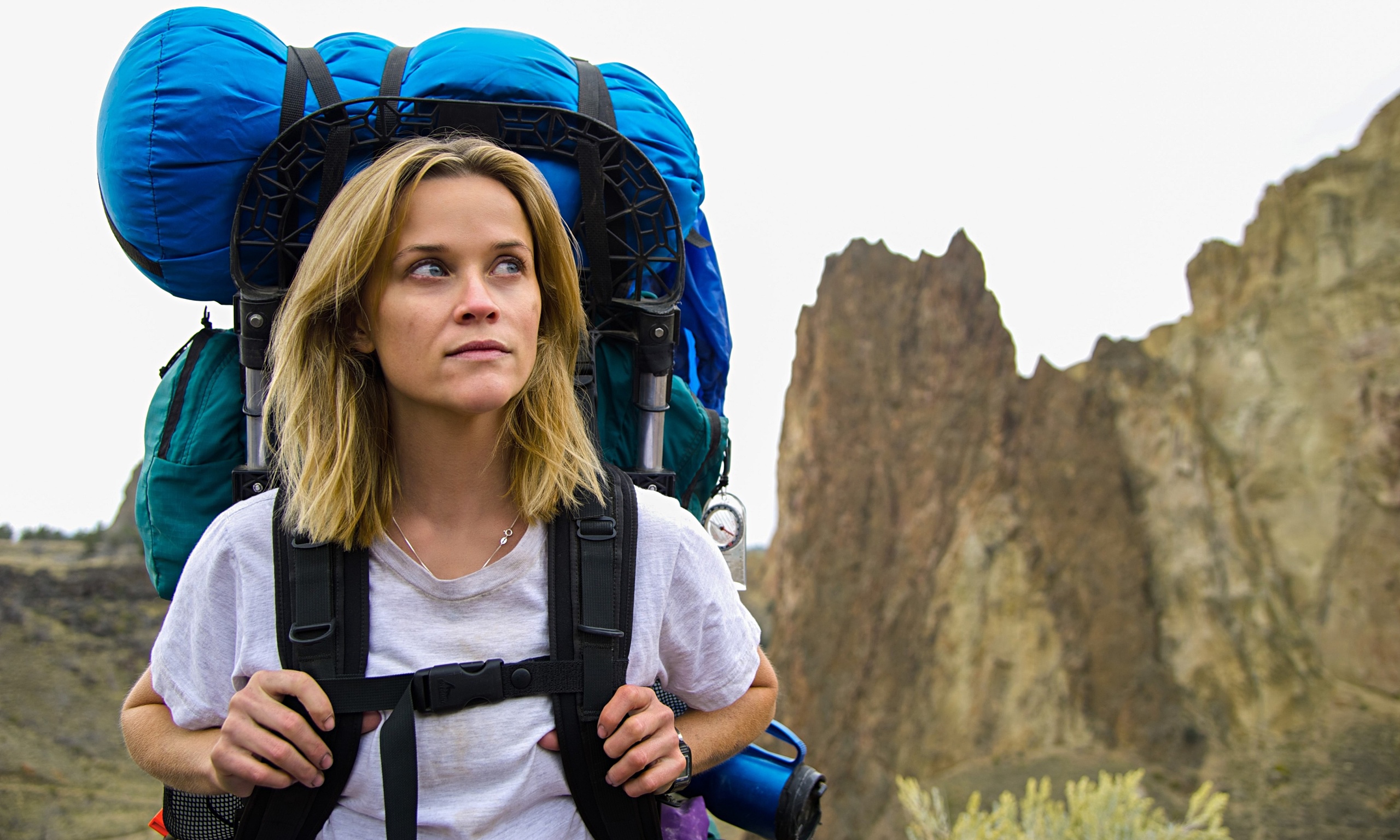
Despite it’s bold title, Wild is a film which never feels particularly adventurous or enthralling – the stakes never seem to be that high and neither its protagonist or its style of film-making seem to venture much off the beaten track. Set in the 1990s, the film relates the ‘based on true events’ tale of a woman named Cheryl Strayed (Reece Witherspoon) who sets out to find herself in the American wilderness after years of self-destructive behaviour resulted in her oddly amicable divorce. Her journey of self-discovery takes place along the Pacific Crest trail which runs from California to Washington, allowing for some brilliant instances of landscape cinematography. The issue is that Strayed’s motives or interests never feel truly involved with her decision to walk the trail. It’s perhaps unfair to compare the two films, but one can’t help but think of Sean Penn’s Into the Wild (2007) which, again based on true events, told the tragic story of Christopher McCandless. It’s interesting to note the contrast between those films’ protagonists: McCandless rejects the world he leaves behind in order to embrace an existence he views as being more pure and rewarding; Strayed escapes her life momentarily, knowing that she will one day return and hoping that this small interlude will foster some sort of cathartic realisation of who she is as a person. There’s more of a physicality to Penn’s film, in which the full force of nature interjects itself into the character’s life and ability to survive, whereas Wild most often sets nature as nothing more than an admittedly alluring, photogenic backdrop. To be fair, Strayed’s concerns are more internal: we learn much of what we know about the character through snippets of narration in the form of her thought process or diary entries. Strayed’s past issues with drugs, infidelity and the loss of her mother are, of course, hugely important aspects of her character, but one senses that such ideas are probably better mapped out within the pages of the memoir from which Wild was adapted. Both McCandless and Strayed each made decisions based on their own needs and desires, and neither should have anything taken away from them in this respect. Perhaps, it’s simply that McCandless’s comparatively more epic tale of self-discovery lends itself more adequately to cinematic adaptation. Nothing really seems to have been gained by adapting Strayed’s story for film and despite some great performances (most notably an outstanding Laura Dern as Strayed’s mother), Wild comes across as a vehicle geared more towards Oscar-baiting and little else.
 Notes from the Multiplex