
Winter Sleep begins quietly, as do most of Nuri Bilge Ceylan’s films (Once Upon a Time in Anatolia, Uzak). A desolate piece of Anatolian landscape fills the screen, a low-lying mist rising from the ground. It is a beautiful tableau, in keeping with Ceylan’s flair for capturing a landscape at in most attractive and, indeed, most haunting. But this marvel of nature is quickly corrupted by the presence of mankind, bringing with it all of its flaws and imperfections. The representative of mankind at hand, is the character of Aydin (a Turkish word meaning ‘intellectual’). A solitary presence within these first few moments: the camera, in the final shot before the film’s title card, closes in on the back of Aydin’s head as he looks out of his window at the countryside. His body is mainly in silhouette and therefore a dark abyss into which camera and audience both stare, masterfully drawing us in towards the psychology and mindset of the man who we are to spend the next three hours in close proximity with.
We find Aydin in the latter part of his life with a past career as an actor (or ‘thespian’ as he prefers to be called) serving as the memory of his long-lost glory days. Nowadays he lives a seemingly comfortable life, writing a weekly column for a local paper on any subject which he deems worthy of his attention and of interest to his, apparently, adoring readers. Although writing is his prime concern, Aydin also owns both a hotel, in which he lives, and a number of properties nearby. But the day to day operation of both the hotel and his duties as landlord are mainly left to those who work for him. Aydin, in fact, remains largely unaware of what properties he owns or who is renting them, choosing instead to hide away in the hotel to focus on his literary ambitions, the masterwork of which being a supposedly forthcoming history of Turkish theatre which he aims to begin as soon is he is willing or able to put pen to paper. The uncanny beauty of the hotel itself quickly becomes something of the film’s central visual metaphor: cut into the harsh, mountainous rock in a remote part of the country, its interiors cold and cavernous despite its outer grandeur. Aydin, despite his claims for artistic respectability and influence, is a cynical and self-centred individual.
Aydin’s knowledge of his tenants begins to expand, however, after an early instance within the film in which a rock is thrown by a small boy at the car which both Aydin and his assistant Hidayet are driving in. This incident prompts an ugly confrontation between Hidayet and the boy’s father, one of Aydin’s tenants who is at risk of being evicted if they are unable to pay the debts they owe to Aydin, who stands sheepishly in the background of this sequence.
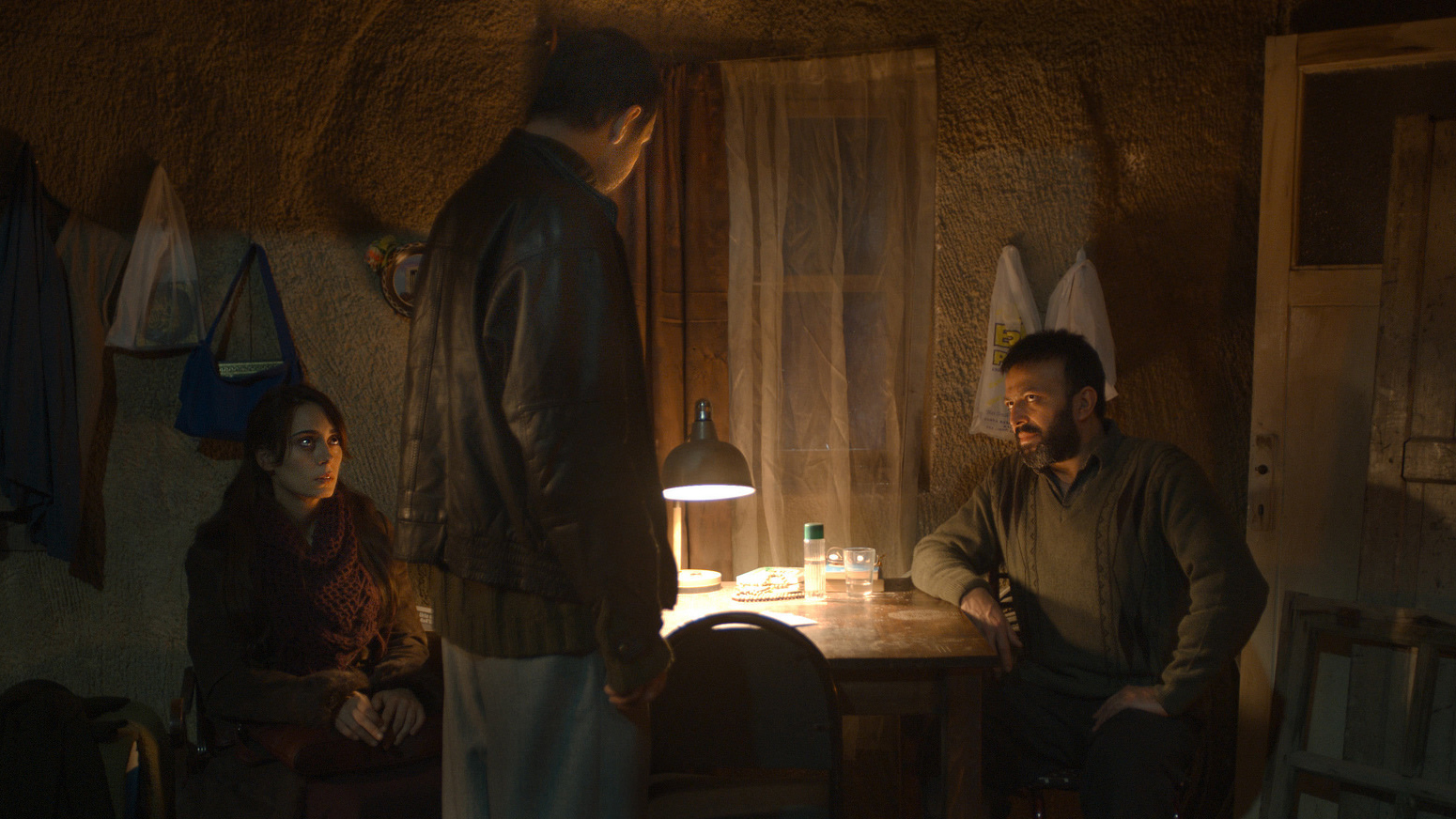
From this point in the film’s narrative, we begin to learn more of Aydin and how he functions within his role as writer, businessman and husband. All three are roles he plays with the absolute minimal amount of effort needed, remaining in utter ignorance for the most part or simply going through the motions when he feels something is demanded of him. But these are traits that are only revealed, developed and built upon gradually as the film progresses. The introduction of Aydin’s wife Nihal, for example, is done so without any theatricality of exposition. Simply in one sequence, Nihal is asked to join the conversation Aydin is having with a friend of his, regarding whether or not he should donate to a local fundraising project. In this moment, Nihal seems cold and distant, yet as the audience learns more of the complexity behind the couple’s troubled marriage, our alignment and sympathy begins to shift and fluctuate.
Ceylan’s directorial presence in this regard, grounds Winter Sleep as an exercise in shaping and crafting audience perception of a story in a manner more akin to a novel than a film: drawing out character and narrative over a longer period of time in order to stretch the possibility of their development to the maximum. On this note, Ceylan has spoken in interviews of the film’s specific indebtedness to literary works by author’s like Chekhov, and such influences are certainly clear. Most of the film revolves around extended sequences of dialogue, normally involving Aydin and one or maybe two other characters. In such scenes, which boast incredibly natural sounding yet precisely constructed conversations, basic character-study gives way to a rich tapestry of human emotion, connection and communication (or their failure), rising and falling in rhythm and intensity towards a greater understanding of the characters in question: their motives, their loves, their hatreds and fears. As Winter Sleep moves towards its conclusion, you feel as if you have known these people all your life.
Aydin, the lonely figure of whom we knew nothing about in those opening moments within the Turkish landscape, becomes a living, breathing human being and, more than that, a testament to Ceylan’s directorial power as one of European cinema’s finest film-makers working today.


 Notes from the Multiplex