It would be easy to talk about any of the iconic frames from the late Mike Nichols’ (perhaps) best loved work The Graduate. The image of Benjamin Braddock (Dustin Hoffman) forcefully framed by the alluring leg of Mrs Robinson (Anne Bancroft), or the famous ending sequence in which Braddock and Robinson’s daughter, Elaine, sit next to each other on the back of a bus heading towards an unknown future, are images synonymous with Nichols’ film. But rather than discuss what has already been talked about endlessly, a few words on a less remembered but equally well crafted moment of the film surely wouldn’t go amiss.
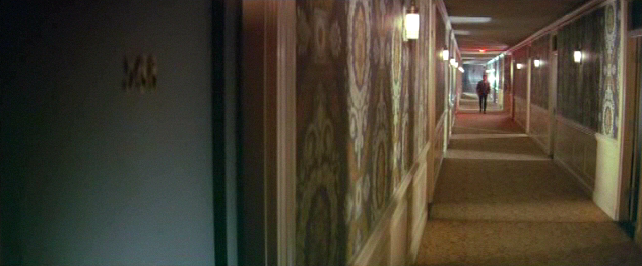
The frame depicted above, the distant figure of Braddock wandering hesitantly towards room 568, is the frame in question, a moment which occurs just before the character actually begins his affair with Mrs Robinson. Following the playful sequence of comedy in which he attempts to navigate his way through the minefield of hotel staff and guests who he believes, in his paranoia, are all aware of what he is planning, Braddock finds himself with a single room (‘ju-just for my-myself’). Mrs Robinson mockingly suggests that Braddock goes up to the room first in order to counter the supposedly ‘suspicious’ desk clerk who served him.
Then in a long take which begins with the above frame, Braddock is seen walking nervously into his future. Initially a minute detail of the frame’s composition, Braddock, with each step forward, gets closer and closer to the room in which he will begin his affair with a woman at least twice his age. Mrs Robinson, we know, isn’t even in the room itself yet, and yet it is the power, the symbolism of the room and what it represents for Braddock which takes centre-stage in this frame. It’s as if the anonymous, carbon copy space of the hotel room can become a site for a deeply personal meaning: a space in which meaning is projected onto the environment by the occupant. It’s no coincidence that the next shot following the one being discussed, is not one of the room itself, but a close-up of Hoffman’s character peering inside and his apprehensive yet controlled reaction to that space. The intensity of his expression speaks volumes about how he sees and characterises the room. It is a place of sin, of risk, of deception, of pleasure and, possibly, his own undoing.
The former moment of cinematic respite, where Nichols chose to keep the camera on the character for the uncomfortable duration in which he approaches the hotel room door, is marked out as the character’s last chance to back away from a future he may not want and to stop himself being a man he may not want to become. The duration of that shot and its framing of Braddock transitioning from insignificance to focal point, provides an elongated opportunity: that last opportunity for the character to back away, which of course, he doesn’t do.




 Notes from the Multiplex