Framing and an attention to frames, takes up a significant role in Wes Anderson’s latest film The Grand Budapest Hotel. Not only does Anderson bring his usual visual flair to the table with the precise framing of every character and object within the image, but the momentum of the plot also rests on the painting of the Boy with Apple and the secret it holds within its very frame. The kind of framing I want to discuss here, however, is how Anderson frames his story, or rather: the story of Gustave and Zero, as told by an older Zero, as recited by a character credited only as ‘the author’ (Jude Law/Tom Wilkinson), and then read about as a memoir by the young girl seen at the very beginning of the film. Anderson, in the opening act of the film, makes his audience sit, roll over and jump through a flaming hoop in their attempt to wrestle with the various layers of narrative and narration.
Whilst I do exaggerate, knowing full well that the film’s plot is in fact very accessible, the unique framing of Hotel Budapest immediately calls attention to the act of story-telling itself and the nature of film narration. Placed on top of the memoir framing device, one can find yet another framing structure: the director himself, who in turn, dives to the bottom of these various stories to get to the heart of the matter.
But why bother with all these framing devices? Brilliantly, one of the few points of differentiation between each framing narrative is marked by a difference in aspect ratio: again calling attention to how exactly Anderson frames his image. The use of different aspect ratios, such as the use of the 1.35:1 or ‘Academy’ ratio within the bulk of the film, ingeniously corresponds to the dominant cinematic practices of the respective historical eras we encounter the characters within. As we venture into the late 60s to find Jude Law’s Author conversing with F. Murray Abraham’s elder Zero, the image is rightly framed in the more contemporary framing of the 2.35:1 widescreen ratio.
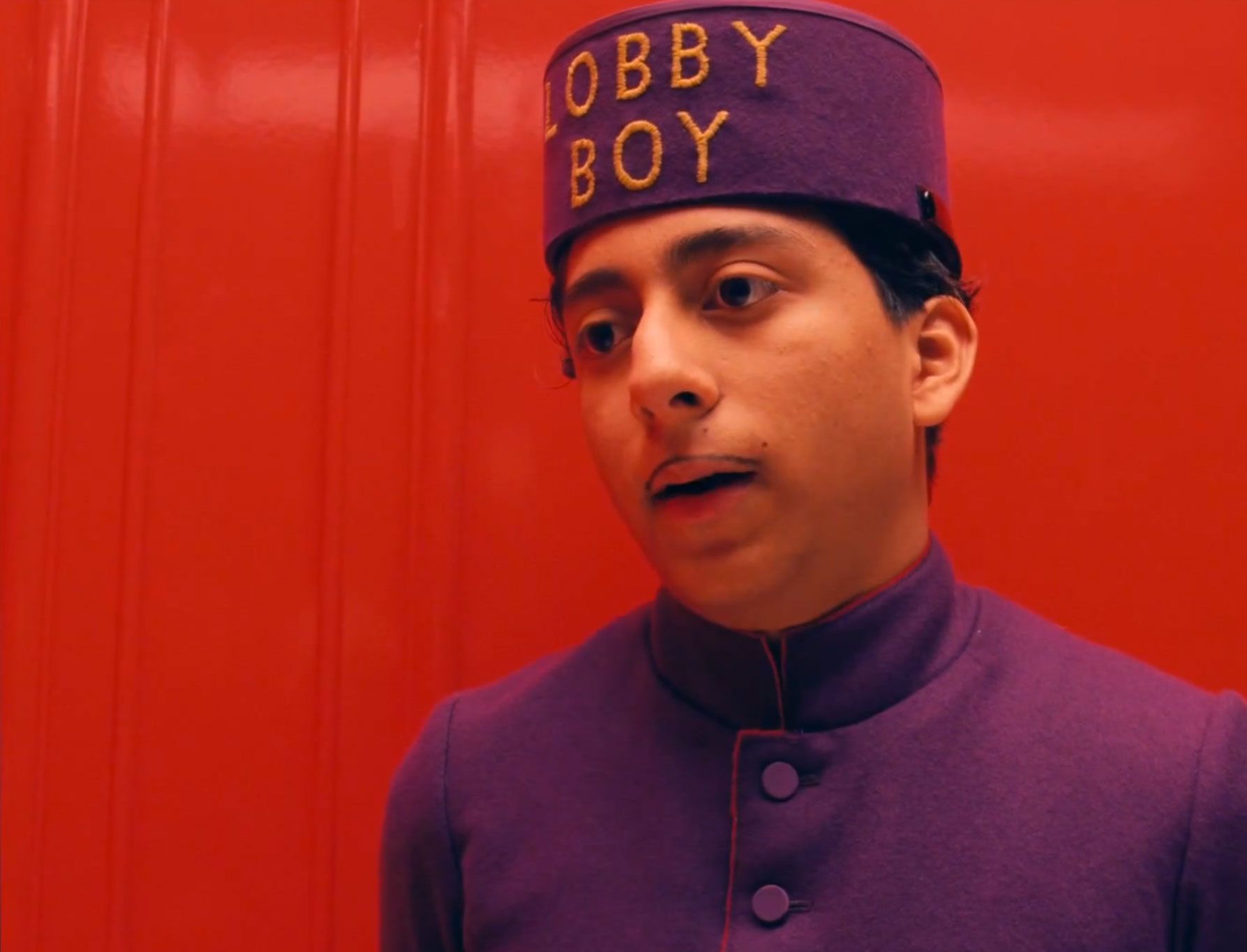

Apart from offering a pleasant nostalgic gaze for the knowledgeable cinephile, and a moment or two in which the frame’s shortcomings are played for comic effect (the brilliantly hidden prison door kept just out of sight of the frame, and the seemingly never-ending ladder rushing across the screen), the discontinuity of framing throughout, also subtly alludes to the different levels of narration in operation. Every storyteller will tell a story differently, and here in the Budapest Hotel we are provided with multiple storytellers. In the larger aspect ratios we come to see the hotel, its space and geography, quite differently, as we do the characters. Noting the change of décor and the age of the characters, the sudden shift of framing also visually marks the change in narration and a shift in the perception of events. The story is presented to the spectator through different narrators or framing narratives, but also through the varying frames of the aspect ratios and their literal physical effect on the film’s image.
Having only seen The Grand Budapest Hotel once, it would be unwise to make any grander claims, but a second viewing would serve to answer some questions relating to this concept of framing. Do each of the narrators tell the story any differently? How exactly do the narrators frame their own roles within the narrative? Zero, for a while at least, refuses to shed light on the character of Agatha and lets her linger in the background, only allowing her to become more of a focal point when it becomes absolutely necessary for the sake of clarity.
The Grand Budapest Hotel, then, becomes something of a maze of stories, narrators and the act of storytelling itself, with Anderson brilliantly weaving his concern of how we frame stories into the frame of the film itself.


 Notes from the Multiplex